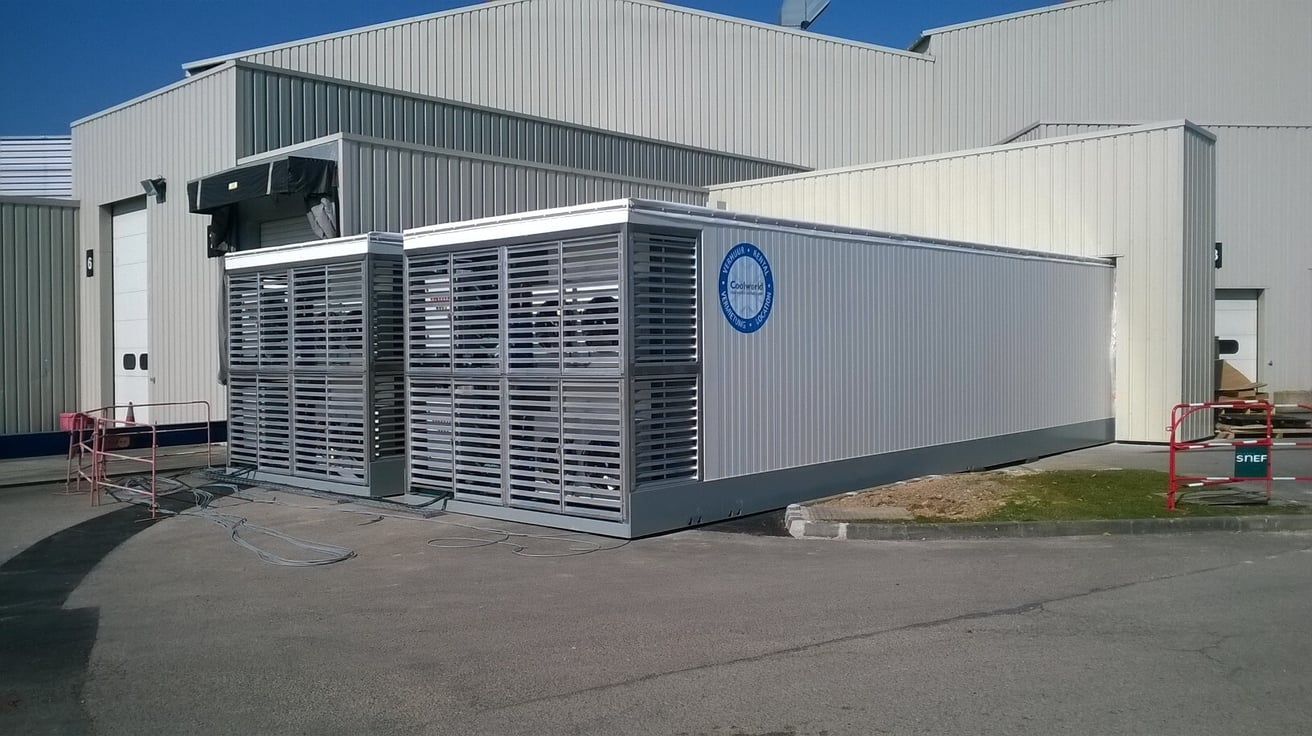
Storing medicines, vaccines and other temperature sensitive medical supplies safely is an essential responsibility for hospitals, pharmacies, pharmaceutical manufacturers and healthcare providers across Ireland. With specific product storage requirements and valuable stock to protect, reliable pharmaceutical cold storage is an important part of everyday operations.
Consistent refrigeration, accurate temperature monitoring and practical contingency plans all help protect product quality. When storage conditions fall outside the specified range, organisations can face stock assessments, operational delays and potential product losses.
Whether managing additional stock, planning maintenance or preparing for equipment failure, access to suitable cold storage capacity helps organisations maintain continuity while meeting their responsibilities.
Why is pharmaceutical cold storage so important?
Medicines have different storage requirements depending on their formulation and stability. Many refrigerated medicines and vaccines require temperatures between +2°C and +8°C, while other products need controlled ambient conditions or specialist frozen storage. The correct conditions must always be determined from the individual product’s approved information and labelling.
Exposure to unsuitable conditions can affect product quality and effectiveness. For sensitive medicines, freezing can be just as damaging as excessive heat. Maintaining the correct conditions throughout storage and handling is therefore essential to protecting products intended for patient use.
A temperature excursion can also create considerable operational pressure. Affected stock may need to be quarantined while its suitability is assessed, leaving teams managing replacement supplies, disrupted schedules and additional costs.
Understanding pharmaceutical storage requirements in Ireland
In the Republic of Ireland, the Health Products Regulatory Authority (HPRA) regulates the manufacture and wholesale distribution of medicines. Pharmaceutical wholesalers must hold the appropriate HPRA authorisation and comply with applicable Irish legislation and the European Commission’s Good Distribution Practice (GDP) guidelines for medicinal products for human use. The HPRA inspects wholesalers to assess compliance.
EU GDP requires suitable premises, equipment and procedures to maintain appropriate storage conditions. It also addresses temperature mapping, calibrated monitoring equipment, alarms and the qualification or validation of critical equipment and processes. These controls sit within the organisation’s quality system and should reflect the risks associated with its activities.
The requirements applying to a particular organisation depend on its activities. Manufacturing, wholesale distribution and the storage of medicines within healthcare settings do not all have identical regulatory obligations. Cold storage arrangements should therefore be assessed against the relevant requirements for the site and the products involved.
Pharmaceutical temperature monitoring: Maintaining visibility of storage conditions
Reliable monitoring provides evidence of how storage temperatures have been maintained and helps teams identify developing problems.
HPRA guidance covers calibrated monitoring devices, appropriate probe locations, temperature records and alarm arrangements. Temperature mapping helps identify variations within a storage area, including warmer and colder locations, so monitoring and stock placement can reflect actual conditions. Alarm procedures should also provide for an appropriate response outside normal working hours.
For organisations planning pharmaceutical cold storage, practical considerations include:
- Who reviews temperature records and responds to alerts.
- How monitoring continues during maintenance or calibration.
- How records are retained and made available for review.
- How an unexpected reading is investigated and escalated.
HPRA GDP guidance states that temperature excursions should be investigated promptly and documented, with the manufacturer consulted to assess the effect of conditions outside the product’s labelled storage requirements. An excursion does not automatically mean stock must be discarded, but its suitability must be assessed before it is released for use or supply.
At Coolworld, additional monitoring equipment can be incorporated into pharmaceutical rental solutions, depending on the application. Options include remote temperature monitoring, alarm systems and data logging, with the required configuration agreed around the customer’s operational and quality requirements.
Pharmaceutical cold storage redundancy: Preparing for disruption
Monitoring identifies a problem, but organisations also need a practical way to protect stock when refrigeration becomes unavailable.
Redundancy means providing backup equipment or alternative storage capacity to reduce reliance on a single system. Depending on the application, this could involve standby refrigeration, a separate cold store or prearranged access to temporary rental equipment.
HPRA temperature control guidance identifies backup power for refrigeration and monitoring systems, maintenance downtime and alarm response as considerations when selecting a cold storage system. The appropriate backup arrangement should be determined through an assessment of the application and its risks.
A contingency plan should address:
- Alternative storage: Where affected stock can be held under suitable conditions.
- Refrigeration backup: How cooling will be maintained during equipment failure or servicing.
- Power continuity: How refrigeration, monitoring and alarms will operate during a power interruption.
- Response responsibilities: Who receives alerts, makes decisions and coordinates the response.
- Stock transfers: How products will be moved while maintaining their required conditions.
- Readiness: How backup equipment, available capacity and procedures will be checked.
The speed of the response matters. A rental unit that must still be delivered, connected and assessed serves a different purpose from installed standby capacity. Planning should account for these lead times alongside the sensitivity of the products and the quantity of stock involved.
For vaccine providers, HSE contingency guidance also recommends establishing an agreement with an alternative storage facility as part of preparations for power disruption.
Discussing backup requirements before an incident gives teams time to establish a workable solution and understand how it will be brought into use.
When pharmaceutical cold storage rental can help
Pharmaceutical cold storage rental can support planned projects, changing demand and contingency arrangements. It provides additional capacity where permanent facilities are temporarily unavailable or no longer sufficient.
Typical applications include:
- Maintenance and refurbishment: Alternative storage while existing equipment is serviced, upgraded or replaced.
- Additional stock: Extra capacity during periods of increased demand.
- Manufacturing projects: Temporary storage to support production changes or site works.
- Equipment breakdowns: Replacement capacity while repairs are completed, subject to availability and installation requirements.
- Business expansion: Interim storage while permanent facilities are developed.
Choosing a suitable rental solution involves more than selecting a temperature range and storage volume. Site access, power supply, stock movement, monitoring and the customer’s approval procedures all influence how the equipment can be used.
For GDP operations, critical equipment must be appropriately qualified or validated, and significant changes must be managed through the quality system. Temporary storage should therefore be assessed and approved through the organisation’s applicable procedures before use.
Early planning allows time to establish these requirements and incorporate the rental equipment into the site’s operations.
Supporting pharmaceutical cold storage across Ireland
Every pharmaceutical application has its own requirements. Product sensitivity, storage temperature, stock volume and operational demands all influence the most appropriate equipment and backup arrangements.
At Coolworld, we work with customers to understand their pharmaceutical cold storage needs and identify suitable rental options. From additional capacity during planned maintenance to temporary storage supporting a contingency plan, these discussions help establish the equipment, monitoring and installation arrangements required.
By bringing reliable refrigeration, temperature monitoring and backup planning together, organisations can better protect valuable stock and maintain continuity across their operations.